



Why does acne develop during pregnancy?
From the very beginning of pregnancy, hormonal balance shifts. Androgen levels rise sharply, especially during the first trimester. As a result, the sebaceous glands go into overdrive and produce excess sebum. This excess sebum can clog pores and lead to the formation of comedones (blackheads and whiteheads), or even inflammatory pimples. Several factors contribute to this hormonal imbalance. Stress, fatigue, water retention, and family history all play a role in worsening the condition. Some pregnant women develop non-inflammatory acne (blackheads on the face, enlarged pores), while others develop inflammatory acne with papules and pustules, and sometimes even cysts or deep, more painful nodules. Pregnancy acne is not a whim: it is a physiological response to massive hormonal upheaval. And no, it is not a matter of hygiene. So let’s put the guilt aside.
Ingredients to Avoid During Pregnancy
This mechanism is not unique to pregnancy. Outside of pregnancy, fluctuations in androgens, estrogens, and progesterone trigger the same overactivity of the sebaceous glands in many women. Menstrual cycles, chronic stress, PCOS:hormonal acne also affects adult women who are not expecting a child. Understanding this hormonal link allows for more targeted care, both during and after pregnancy.
Before discussing treatment options, there is one crucial point to note: certain ingredients commonly used to treat acne are strictly contraindicated for pregnant women. Self-medication in this case poses real risks to the fetus.- Retinoids (retinol, tretinoin, isotretinoin): Whether taken orally or applied topically, retinoids are teratogenic. They can cause serious birth defects. Their use is strictly prohibited, without exception.
- High-concentration salicylic acid (BHA): at concentrations above 2%, topical use is not recommended during pregnancy. The use of products containing low doses of BHA on an occasional basis remains a matter of debate: always seek medical advice.
- Endocrine disruptors: long-chain parabens, phthalates, certain chemical UV filters (oxybenzone, octinoxate). During pregnancy, their ability to interfere with the endocrine system is of particular concern.
- Essential oils: Caution is advised. Many are not recommended, especially during the first trimester. It’s best to avoid them.
What are some natural remedies for pregnancy acne?
The good news? Natural ingredients have been shown to be beneficial for acne-prone skin, with no identified risks during pregnancy. Here are the ones worth checking out.Malic acid: a gentle exfoliant derived from sea buckthorn berries
Malic acid is an AHA (alpha-hydroxy acid) naturally found in sea buckthorn berry juice. This acid gently cleanses pores, helps eliminate bacteria that cause blemishes, and reduces skin inflammation. It improves the appearance of blemished, congested, or acne-prone skin, while respecting the skin’s increased sensitivity during pregnancy.Omega-7: The Exceptional Sebum Regulator
Palmitoleic acid, the primary omega-7 fatty acid, is one of the natural substances most similar to human sebum. It acts as a sebum regulator: it regulates sebum production in both directions, curbing excess without drying out the skin. According to a study by Jung et al. (2014), GLA-type fatty acids, found in sea buckthorn oil, may help significantly reduce both inflammatory and non-inflammatory acne lesions, thanks to their anti-inflammatory action via the modulation of cyclooxygenase and protein kinase C (Solà Marsiñach & Cuenca, *Lipids in Health and Disease*, 2019). Only four fruits in the world contain significant amounts of omega-7, and sea buckthorn berries contain at least 20 times more than the others. This makes them a valuable asset for expectant mothers looking to reduce breakouts without irritating their skin.Niacinamide, zinc, bakuchiol: other options
Topical niacinamide (vitamin B3) at concentrations of 2–5% can reduce acne by regulating sebum production in the sebaceous glands and inhibiting inflammatory mediators such as interleukin-8. Zinc, whether applied topically or taken orally in moderate doses, is also considered safe during pregnancy. As for bakuchiol, often presented as a plant-based alternative to retinol, data remain limited in pregnant women: caution and medical advice are required.A natural two-step routine for expectant mothers
No need to layer on ten products. During pregnancy, your skin needs simplicity, gentleness, and targeted effectiveness. Here’s a minimalist beauty routine designed for blemish-prone skin.Step 1: Cleanse gently
Morning and night, start with a purifying mist made with sea buckthorn spring water. Rich in vitamin C and malic acid, this water cleanses pores, limits bacterial growth, and soothes redness. La Maison de l’Argousier’s Secret d’Éclat does exactly that: a powerful antibacterial, it prepares the skin for the next step in your skincare routine. Two to three sprays on the face are sufficient. A quick step, no rinsing required. Dermatologically controlled clinical tests on 22 volunteers over 21 days: 100% of skin is smoother, soothed, and purified. Revitalizing effect: +41%.Step 2: Moisturize and balance
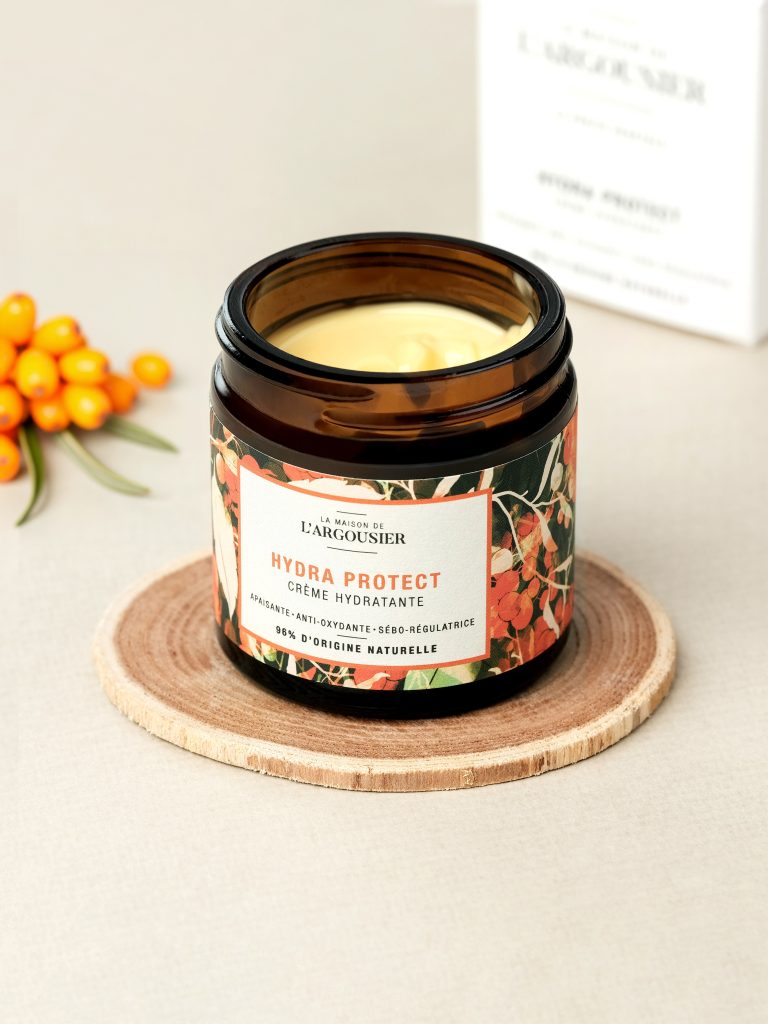
Next, apply a sebum-regulating, non-comedogenic moisturizer. Maison de l’Argousier’s Hydra Protect combines native water and organic sea buckthorn berry oil in a formula free of endocrine disruptors and essential oils. It regulates sebum in two ways: it reduces excess oil in oily skin and nourishes dehydrated areas. Clinical results: a significant increase in matte finish (+47%) and improved skin softness (+40%). Formulated with at least 96% natural ingredients and rated “Excellent” on Yuka, this cream is suitable for all skin types, including skin made more sensitive by pregnancy.Does pregnancy acne go away after giving birth?
In most cases, pregnancy acne gradually clears up after childbirth, as hormone levels stabilize. This process takes anywhere from a few weeks to a few months, depending on the woman. For some, improvement begins as soon as their period returns. For others, acne may persist during breastfeeding, a time when hormonal fluctuations continue. If scars or blemishes persist beyond three months postpartum, a dermatological follow-up may be helpful. In the meantime, continuing a gentle routine with appropriate natural skincare products remains the best strategy.Acne or pregnancy mask: How can you tell the difference?
For some women, breakouts do not clear up once hormone levels stabilize. Pregnancy acne can then develop into persistent adult acne, fueled by stress, diet, or an underlying hormonal imbalance. If your breakouts persist beyond the postpartum period, a comprehensive evaluation with your dermatologist will help identify the causes and adjust your skincare routine.
The two sometimes occur together, but they are not the same condition. Acne manifests as breakouts (comedones, papules, pustules), excess sebum, and visible pores. Melasma appears as brown pigmented patches, especially on the forehead, cheekbones, and upper lip, and is exacerbated by sun exposure. The malic acid found in sea buckthorn water is also used in the formulation of skin-lightening products and in the treatment of melasma. SPF 50 sunscreen remains essential to prevent both conditions from worsening. Consult your primary care physician or a healthcare professional to adjust your skincare routine.Key Takeaways
Pregnancy acne is a common occurrence linked to hormonal acne caused by rising androgen levels. It affects many women, including those who have never had breakouts before. The key: a natural skincare routine, products free of endocrine disruptors, and active ingredients with proven safety. Sea buckthorn, thanks to its sebum-regulating omega-7 fatty acids and its native water rich in malic acid, is a remarkable ally for acne-prone skin during this time. And if breakouts persist, never hesitate to seek medical advice: as women, we support one another, and a healthcare professional will always provide the best guidance. The information provided is for informational purposes only and does not constitute medical advice. Consult your doctor or pharmacist.FAQ
What are pimples like in early pregnancy?
Early in pregnancy, breakouts often take the form of comedones: blackheads and whiteheads on the face, chin, or forehead. Excess sebum caused by hormonal changes can also lead to papules (small red bumps without pus) or pustules. For some women, the appearance of these blemishes is one of the first signs of pregnancy, even before a missed period.How can you treat pregnancy acne naturally?
Adopt a minimalist skincare routine with suitable natural products: a gentle malic acid-based cleanser to purify the pores, followed by a non-comedogenic, sebum-regulating moisturizer. Avoid retinoids and high-dose salicylic acid. Opt for simple formulations free of essential oils and endocrine disruptors. A balanced diet, rich in omega-3s and low in simple sugars, can also help reduce breakouts.Does early pregnancy cause acne?
Yes, acne can appear as early as the first trimester. From the start of pregnancy, hormonal balance shifts: androgen production increases, stimulating the sebaceous glands. The resulting excess sebum can clog pores and cause breakouts. Some women notice an improvement in the second trimester, while others find that their acne persists throughout their pregnancy.Which cosmetic ingredients should you absolutely avoid during pregnancy?
Retinoids (retinol, tretinoin, isotretinoin) are strictly contraindicated: they are teratogenic. High-concentration salicylic acid, long-chain parabens, certain chemical UV filters, and most essential oils should also be avoided. Read the INCI lists carefully and seek medical advice if you have any doubts about a product.Sources and references
- Solà Marsiñach, M. & Cuenca, A.P. “The impact of sea buckthorn oil fatty acids on human health.” Lipids in Health and Disease, 18:145 (2019). Study focusing in particular on the effect of GLA (omega-6) on acne lesions, citing the work of Jung et al. (2014). Link to the study
- Vernet, A. “Sea Buckthorn (Hippophae rhamnoides L.)”. Phytothérapie, vol. 4, pp. 125–129 (2006). Confirmation of the benefits of sea buckthorn oil for skin protection and regeneration. Link to the article
- Clinical tests conducted under dermatological supervision (by an accredited organization), a 21-day protocol involving 22 volunteers; data provided by Maison de l’Argousier.


 Free shipping when you buy 2 or more items!