



La sécheresse vaginale, on en parle peu, et pourtant elle concerne environ une femme sur six selon les données du groupe hospitalier ELSAN. Certaines estimations vont même jusqu’à 80 % des femmes touchées au moins une fois dans leur vie. Inconfort quotidien, douleurs lors des rapports sexuels, baisse de la libido : ce n’est pas « dans la tête ». C’est un phénomène physiologique, avec des causes identifiables et, surtout, des solutions naturelles concrètes.
Why Vaginal Dryness Occurs: The Real Causes
The vagina has a remarkable natural lubrication system. At the cervix, glands produce a viscous fluid that coats the vaginal wall, flushes out dead cells, and protects against infections. When this mechanism malfunctions, the mucous membrane gradually dries out.
The most common cause? A drop in estrogen levels. These female sex hormones maintain vaginal lubrication, the thickness of the mucous membrane, and the elasticity of the tissues. When estrogen production declines, the vaginal tissue shrinks, its walls become more fragile, and the cells that produce mucus become fewer in number.
Et cette chute hormonale ne concerne pas que la ménopause, cause fréquente de sécheresse vaginale. Elle peut survenir :
- During pregnancy and breastfeeding (when estrogen levels are significantly reduced)
- Taking birth control pills or hormone therapy
- After ovarian surgery
- During cancer treatment (chemotherapy, pelvic radiation therapy)
However, the causes of vaginal dryness are not solely hormonal. Severe stress, certain medications (antidepressants, antihistamines, diuretics), tobacco, alcohol, or autoimmune conditions such as Sjögren’s syndrome can dry out the vaginal lining. For reference, vaginal estradiol levels in smokers (119 ng/L) are significantly lower than those in nonsmokers (174 ng/L).
Intimate hygiene and clothing: factors that are often overlooked
We rarely think about it, but the truth is, everyday habits can make vaginal dryness worse without us even realizing it.
Clothing that is too tight creates a hot, humid environment in the genital area, which can lead to irritation. Synthetic underwear prevents air circulation. Simply opt for cotton.
When it comes to intimate hygiene, there’s a double trap: too little isn’t enough; too much is harmful. Vaginal douches, scented soaps, wipes, and intimate deodorants often contain irritating substances that disrupt the vaginal flora. This flora, composed mainly of lactobacilli, forms an essential protective barrier. Disrupting it opens the door to infections and exacerbates dryness.
The right approach: a moisturizing cleansing gel with a pH level close to that of the skin (around 5.5), washing once a day (twice a day during your period), and avoiding any scented products in the intimate area. Prolonged use of tampons can also disrupt the vagina’s natural defenses by absorbing protective secretions.
Symptoms of vaginal dryness: how to recognize them
Every woman experiences vaginal dryness differently. Some feel constant discomfort, while others only experience it during sexual intercourse. Here are the most common symptoms:
- A burning or itching sensation in the vulva and vagina
- Vulvar itching
- Pain during sexual intercourse (dyspareunia)
- Light bleeding after intercourse
- Redness around the cervix and labia
- Recurrent urinary tract infections or vaginitis
- Burning sensation when urinating
This pain during intercourse often leads to less frequent sex, which can put a strain on the relationship. The resulting drop in libido isn’t psychological—it’s a direct result of physical discomfort. There’s no need to feel guilty about it, not at all.
An important point: vaginal dryness and yeast infections are not the same thing. A yeast infection (candidiasis) is characterized by thick, white, clumpy discharge accompanied by intense itching. Vaginal dryness, on the other hand, is characterized by the absence or reduction of vaginal secretions. However, the two can occur at the same time. If you’re unsure, your gynecologist can make an accurate diagnosis through an examination and, if necessary, a vaginal swab.
Seeing a gynecologist: when and why
If vaginal dryness persists or is accompanied by unusual symptoms (bleeding, sharp pain, recurrent infections), medical advice is necessary. The gynecologist will perform a physical examination and may order blood tests to measure FSH (follicle-stimulating hormone) levels and detect a possible hormonal imbalance or early menopause.
Standard medical treatments include topical lubricants (gels or suppositories), vaginal moisturizers, and, for postmenopausal women, hormone replacement therapy (HRT). HRT is contraindicated in women with a history of hormone-dependent cancer.
Medicine is not an exact science. It is an art. Seeking multiple medical opinions is never a sign of disrespect toward your doctor.
Relieving vaginal dryness naturally: the key role of omega-7
Let’s talk about solutions. More specifically, let’s talk about a fatty acid you may not be familiar with yet: palmitoleic acid, or omega-7.
Seuls quatre fruits au monde contiennent des oméga-7 en quantité significative. L’argousier (Hippophae rhamnoides) en est de très loin le plus concentré, avec un niveau au moins 20 fois supérieur aux autres sources végétales. Ce n’est pas anodin : les oméga-7 sont des constituants naturels des muqueuses humaines. Ils contribuent à nourrir et régénérer les tissus muqueux, qu’il s’agisse des muqueuses vaginales, digestives, oculaires ou respiratoires. Au-delà de la sphère intime, cette fragilité des muqueuses peut concerner d’autres zones du corps : sécheresse des muqueuses au-delà de la sphère intime.
Les yeux sont eux aussi directement touchés par cette fragilité des muqueuses. Environ 60 % des femmes ménopausées souffrent de sécheresse oculaire, avec des sensations de brûlure ou de picotements parfois invalidantes. Des solutions naturelles existent, notamment les oméga-7 et la lutéine : découvrez notre article dédié à la sécheresse des yeux pendant la ménopause.
La baisse des œstrogènes ne fragilise pas uniquement la muqueuse vaginale. La bouche est elle aussi directement concernée : production de salive réduite, gencives plus sensibles, risque accru de caries. L’argousier, grâce à ses oméga-7, peut aussi agir sur cette zone. Pour mieux comprendre ce phénomène, découvrez notre article sur la sécheresse buccale liée à la ménopause et le rôle de l’huile d’argousier sur les muqueuses orales.
In practical terms, omega-7 fatty acids act as natural shields: they protect the mucous membranes from irritation, reduce water loss, and maintain tissue elasticity. For women experiencing a lack of lubrication, this “internal” nourishing effect is particularly beneficial.
Naturopath Myriam Lepetit-Brière confirms this approach: “In naturopathy, about 75% of the health of the skin and mucous membranes is determined by internal factors. I often recommend sea buckthorn in supplement form for women in perimenopause, a time when the mucous membranes become drier and more sensitive. Sea buckthorn provides deep, lasting, and physiological support.”
Sea buckthorn: Much more than just omega-7
Sea buckthorn oil is more than just its omega-7 fatty acids, as valuable as they may be. It also contains:
- 9 times more vitamin C than an orange, a powerful antioxidant that supports the immune system
- Vitamin E (four times more than sunflower oil), which protects the fatty acids in the skin and mucous membranes from oxidation
- Omega-6 and omega-9 fatty acids, which are essential for maintaining the hydrolipidic film and supporting digestive comfort
- Beta-carotene (10 times more than a carrot), an antioxidant and a precursor to vitamin A
This nutritional richness makes sea buckthorn a remarkable ally for the health of the mucous membranes and skin. Other complementary approaches exist (borage oil, aloe vera, probiotics), but none deliver as many active nutrients to the mucous membranes as sea buckthorn.
La Rayonnante: a nutricosmetic designed for intimate comfort
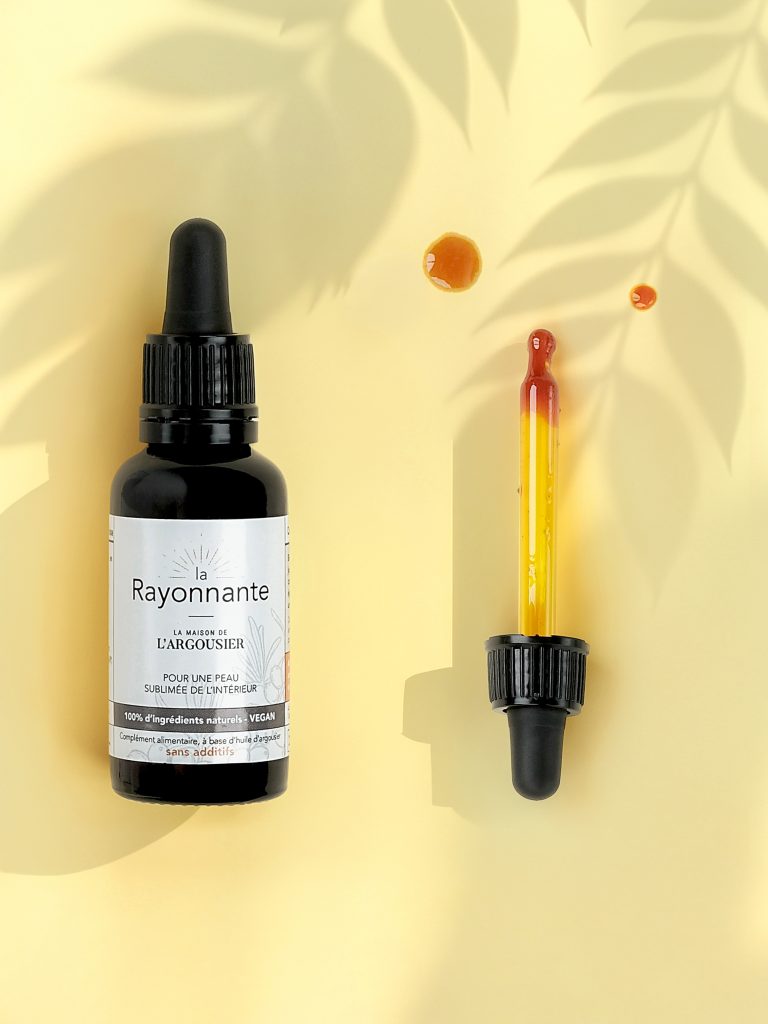
It is precisely this potential that Maison de l’Argousier wanted to make accessible with La Rayonnante, our sea buckthorn oil-based supplement. This 100% natural, Clean Label dietary supplement combines just four ingredients: organic sea buckthorn oil, coenzyme Q10, lutein, and vitamin E.
Why so few ingredients? Because the sea buckthorn oil used by Maison de l’Argousier contains both pulp oil and seed oil, in the same proportions as found in the natural berry. This whole-berry extract preserves all the fatty acids (omega-3, 6, 7, 9), vitamins, and polyphenols. Extraction is carried out using an enzymatic process, without solvents or heat, to ensure nothing is altered.
La Rayonnante comes in a dropper bottle, not in capsules. This is a deliberate choice: the liquid oil offers better bioavailability. It supports women seeking intimate comfort, as well as supple, radiant skin and stronger hair and nails.
Diet and Habits: Simple Steps That Make a Difference Every Day
Beyond supplements, diet plays a direct role in vaginal hydration. Choose foods rich in omega-3 and omega-6 fatty acids: salmon, mackerel, sardines, flaxseed oil, and walnut oil. These fatty acids help maintain a healthy balance in the vaginal lining.
A few simple habits can also make a difference:
- Wear loose-fitting clothes and cotton underwear
- Avoid tobacco (it measurably reduces vaginal estradiol levels)
- Limit alcohol
- Extend foreplay during sex to promote natural lubrication
- Don't wear underwear at night to let the area breathe
Vaginal dryness is not inevitable. It deserves to be discussed, its causes understood, and action taken. With gentle hygiene practices, a balanced diet, medical care when necessary, and targeted nutrients like omega-7 from sea buckthorn, regaining long-lasting comfort is entirely possible.
Vaginal dryness is often one of the first signs of a broader hormonal shift. Hot flashes, sleep disturbances, and fatigue: these symptoms can accumulate and require a holistic approach. For more information, check out our comprehensive guide to navigating menopause naturally, which details herbal remedies and lifestyle adjustments tailored to each stage.
The information provided is for informational purposes only and does not constitute medical advice. Consult your doctor or pharmacist.
Frequently Asked Questions
What causes vaginal dryness?
Vaginal dryness is most often caused by a decrease in estrogen production, the hormones that maintain the vagina’s natural lubrication. Menopause is the most well-known cause, but pregnancy, breastfeeding, birth control pills, certain medications (antidepressants, antihistamines), severe stress, smoking, or overly aggressive intimate hygiene can also be responsible. Sjögren’s syndrome, an autoimmune disease, can also cause damage to the lubricating glands.
How can you tell if vaginal dryness is a personal issue?
Common symptoms of vaginal dryness include a burning or itching sensation in the vulva, pain during sexual intercourse, light bleeding after intercourse, and sometimes recurrent urinary tract infections or vaginitis. Be careful not to confuse vaginal dryness with a yeast infection: a yeast infection is accompanied by thick, clumpy white discharge, whereas dryness is characterized by the absence or reduction of secretions. A gynecologist can confirm the diagnosis through a clinical examination and a swab test if necessary.
How do you moisturize a woman's intimate area?
Several approaches work together. Externally, lubricants or moisturizing creams provide immediate relief. Internally, dietary supplements rich in omega-7 (such as those made from sea buckthorn oil) help nourish the mucous membranes from within. Diet also plays a role: prioritize fatty fish (salmon, mackerel) and vegetable oils rich in omega-3 and 6. When it comes to hygiene, use a gel with a physiological pH (5.5), and avoid scented products and douches. If dryness persists, your doctor may prescribe a topical hormonal treatment.
How long does vaginal dryness last?
The duration depends entirely on the cause. Vaginal dryness related to breastfeeding or the postpartum period is usually temporary and resolves once estrogen levels return to normal. Dryness related to menopause may be more long-lasting because the drop in hormone levels is permanent, but solutions exist to alleviate the discomfort over the long term. Dryness caused by medication or stress may improve once the triggering factor is eliminated. In all cases, appropriate treatment (medical and/or natural) can help restore significant comfort.
Sources and references
- ELSAN, “Vaginal Dryness: Definition, Causes, and Treatment,” an article reviewed by a gynecologist. Read the article
- Saforelle, “Vaginal dryness or yeast infection: how to tell the difference?”, with references from Ameli.fr, PubMed, and DUMAS. Read the article
- Product data from the scientific dossier of La Maison de l’Argousier (press release from La Rayonnante, presentation by Michel Sabadie, MS Cosmetics Conseil).


 Free shipping when you buy 2 or more items!